


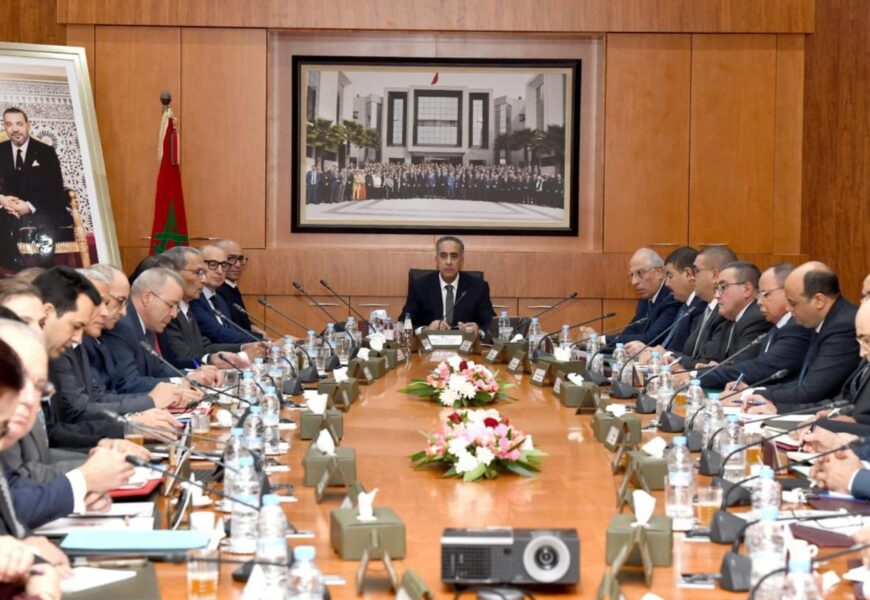
Rabat – Morocco’s General Directorate of National Security (DGSN) on Wednesday unveiled its 2025 annual review, outlining a year marked by structural reform, accelerated digital transformation and a measurable decline in violent crime, alongside an expanded international security footprint.
Presented as part of the institution’s ongoing transparency policy, the report paints the picture of a police service in transition: more modern in its infrastructure, more digital in its services, and more proactive in addressing both domestic and transnational security threats.
Modern infrastructure and a renewed vision of policing
Among the flagship projects highlighted is the imminent commissioning of the DGSN’s new central headquarters in Rabat, scheduled for the first half of 2026. Designed as an integrated physical and digital ecosystem, the complex is expected to bring together all central departments within a single, high-security administrative hub aligned with international standards.
Equally significant was the inauguration, in December 2025, of the Higher Institute of Security Sciences in Ifrane. Conceived as a next-generation academic platform, the institute aims to elevate police training through specialised programmes, applied research and international knowledge exchange, with a particular focus on Africa. Its launch was accompanied by the signing of a cooperation agreement with Saudi Arabia’s Naif Arab University for Security Sciences, reinforcing Morocco’s ambition to position itself as a regional centre for advanced security training.
On the ground, the DGSN continued to expand its community policing model, upgrading several local security units, opening new police schools and strengthening specialised services, including tourist police units and road traffic investigation teams.
Digital transformation and closer services to citizens
The 2025 review places strong emphasis on digitalisation, described as a central pillar of the DGSN’s reform agenda. The E-Police platform continued to expand its range of online services, with the authorities announcing the finalisation of a new system allowing Moroccans living abroad to apply for criminal record certificates online and receive them in their countries of residence. Within Morocco, more than 34,000 such requests were processed digitally during the year.
Efforts to extend access to the new-generation national electronic identity card also intensified. The deployment of 80 additional mobile units enabled outreach to remote and mountainous areas, benefiting over 85,000 citizens. Abroad, electronic registration was rolled out across 71 consular and diplomatic centres, facilitating the issuance of 303,285 identity cards to members of the Moroccan diaspora.
In total, the DGSN reports that 3.69 million electronic identity cards were produced in 2025, reflecting the scale of this nationwide digital and administrative effort.
Crime trends: stability overall, violence in retreat
From a security standpoint, the DGSN recorded 779,008 criminal cases nationwide in 2025, a figure broadly in line with previous years. More striking, however, is the reported 10% drop in violent crime, an indicator the institution presents as central to public perceptions of safety.
Specific categories of serious theft showed notable declines: armed robberies fell by 24%, violent thefts by 6%, and aggravated burglaries by around 12%. At the same time, police services achieved a 95% clearance rate, described as a record level and the culmination of a steady upward trend over the past nine years.
Targeted operations against organised criminal groups led to the dismantling of 1,112 violent crime networks, the arrest of 1,737 suspects, and the seizure of vehicles used in criminal activities.
Drugs, cybercrime and irregular migration: sustained operational pressure
Drug trafficking remained a major focus of police action. According to the report, 106,117 drug-related cases were handled in 2025, resulting in 134,126 arrests. Seizures included more than 170 tonnes of cannabis resin, 1.7 tonnes of cocaine, and over 1.5 million psychotropic pills, including large quantities of ecstasy. Joint operations with Spain, including six controlled delivery operations, contributed to major international seizures.
Cybercrime also featured prominently, with 13,643 cases processed during the year. Authorities identified 3,131 extortion-related digital contents and issued 1,036 international requests for cooperation. Since its launch in mid-2024, the national online reporting platform “بلاغ” (Iبلاغ) has received 25,876 reports, mainly concerning defamation, threats, identity theft and online sexual extortion.
In the area of irregular migration, police services dismantled 105 criminal networks, intercepted 34,211 migration attempts, and seized hundreds of forged travel documents.
Road safety: rising accidents in urban areas
The report also flags road safety as a growing concern. Urban areas recorded 101,053 injury-causing traffic accidents, a 4% increase year-on-year. These incidents resulted in 1,433 fatalities, 5,556 serious injuries and more than 128,000 minor injuries, prompting continued enforcement and prevention efforts.
International cooperation: Morocco at the centre of global policing
A major diplomatic highlight of 2025 was Morocco’s hosting of the 93rd General Assembly of Interpol in Marrakech, attended by representatives from 181 countries. The event underscored Morocco’s standing as a trusted partner in international security cooperation and provided a platform for dozens of bilateral meetings.
The DGSN reported the signing of new memoranda of understanding, notably with Norway and Ethiopia, and a strengthening of operational ties with partners across Europe, Africa, Asia and the Americas, particularly in combating transnational organised crime and terrorism.
Human capital: recruitment, promotion and institutional protection
Human resource management remained a strategic priority. In 2025, 4,693 new recruits entered basic police training, while six external recruitment competitions offered 6,733 positions across various ranks. More than 6,450 officers were assigned to central and regional units.
Promotion and recognition mechanisms were also highlighted, with 10,393 officers promoted under the 2024 budget cycle and over 14,000 promotion files reviewed for 2025. Social and welfare measures were expanded, including enhanced health coverage, financial assistance and legal protection for officers in the line of duty.
Looking ahead to 2026
Looking forward, the DGSN says it will build on the gains of 2025 by completing major infrastructure and digital projects, strengthening proximity policing, and refining security protocols for major international events — notably the Africa Cup of Nations and, further ahead, the 2030 FIFA World Cup.
Taken together, the 2025 review presents a narrative of continuity and consolidation: a security institution seeking to combine operational effectiveness with modern governance, digital innovation and growing international influence.