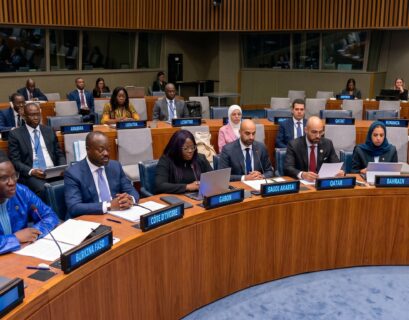


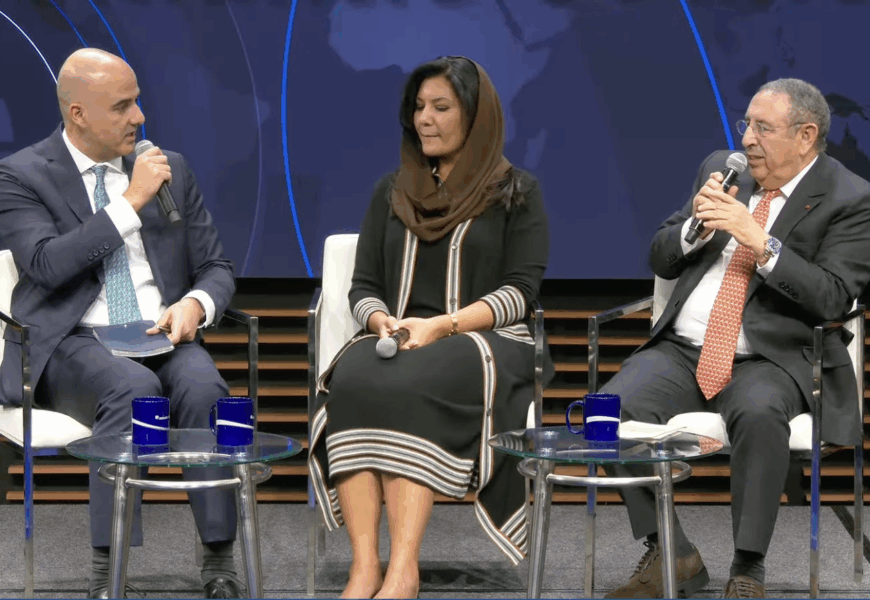
On Thursday, December 4, the Atlantic Council kicked off an unprecedented strategic discussion in Washington. On the eve of the 2026 World Cup draw, experts, diplomats, and decision-makers explored the new frontiers of “sports diplomacy,” a lever of influence that now extends far beyond the mere stakes of competition.
Sport is no longer just a game. This was the key takeaway from the inaugural “Beyond the Game” conference, organized by the prestigious Atlantic Council think tank. As the United States, Mexico, and Canada prepare to welcome the world for the 2026 World Cup, the event highlighted how football has become a vector for soft power, economic development, and security resilience.
“Football is one of the most reliable diplomatic platforms in the world,” stated Victor Montagliani, CONCACAF President and FIFA Vice-President, at the outset. In a fractured world, the pitch remains a “neutral ground” where nations in political disagreement agree to play by the same rules. For North America, the joint hosting of the 2026 World Cup by three countries with distinct cultures and political systems is living proof of this diplomacy in action.
The event also gave the floor to future host nations, underscoring the geopolitical shift in sports. Youssef Amrani, Morocco’s Ambassador to the United States, brilliantly outlined the Kingdom’s vision for the 2030 World Cup, co-hosted with Spain and Portugal. He described the event as a “historic bridge” between Africa and Europe, transcending simple trade exchanges to build lasting human bonds.
“For the first time, a World Cup will unite two continents, Africa and Europe. It is much more than a tournament: it is a message of peace, tolerance, and coexistence that we are sending to the world, proving that the Mediterranean is a link and not a barrier,” he affirmed.
The Moroccan diplomat also emphasized the tangible legacy of the Royal vision, stressing that the Kingdom’s sports diplomacy is inseparable from its internal development dynamic.
“Under the leadership of His Majesty the King, sport has become a lever for human development. The infrastructure we are building today—roads, hospitals, stadiums—is not just for a one-month competition, but for future generations. It is an investment in our youth and a catalyst for the national economy,” he explained.
For her part, Princess Reema bint Bandar Al Saud, Ambassador of Saudi Arabia (host of 2034), delivered a vibrant plea on the social impact of sports, particularly for women. “It is a question of opportunity,” she hammered home, recalling that investment in sport is primarily an investment in youth and job creation.
The conference also frankly addressed colossal security challenges. Andrew Giuliani, Executive Director of the White House Task Force for the 2026 World Cup, offered assurances regarding federal coordination, particularly concerning visa management via the new “FIFA Pass” system and stadium security against modern threats such as drones.
Beyond the 30 days of competition, it is the legacy that counts. Don Garber, Commissioner of Major League Soccer (MLS), recalled how the 1994 World Cup enabled the birth of a professional league that is flourishing today. For 2026, the ambition is to transform this opportunity into an American “century of sport,” leaving behind infrastructure, jobs, and a deeply rooted passion.