
Yesterday, the world’s attention turned to North America as the 2026 World Cup kicked off, launching what will be the largest football tournament ever held. For millions of fans, it marked the beginning of a sport celebration. For the United States, Canada, and Mexico, it’s something that doesn’t show up on the match schedule: a rare, large-scale demonstration of what international cooperation looks like in practice – cooperation that the United States and Morocco have been practicing for 250 years.
The timing is hard to ignore. As Americans mark 250 years since independence, the 2026 World Cup arrives not just as a sporting event but as a statement. The energy, openness, and diversity that have defined this country for two and a half centuries will be on full display – in stadiums, in host cities, and in the countless exchanges between fans who traveled from every corner of the globe to be here.
Years of planning have brought together federal, state, and local authorities, security professionals, transportation agencies, and private-sector partners to help ensure a safe, secure, and memorable experience for players and supporters alike. Morocco has been part of this collaboration. From an FBI delegation observing stadium security at the 2025 Africa Cup of Nations in Rabat in January, to U.S. and Moroccan forces training together at the Grand Stadium in Agadir during Exercise African Lion just last month, our two countries have been building the security architecture that makes global sporting events possible.
The close cooperation among the United States, Canada, and Mexico – like the cooperation between the United States and Morocco – offers an important example of what’s possible when countries decide to build something together rather than around each other.
Next year, the United States and Morocco will commemorate 250 years of friendship, one of the longest diplomatic relationships in American history, predating the U.S. Constitution itself. What began as a formal recognition has, over two and a half centuries, grown into something far richer: trade, education, security cooperation, entrepreneurship, and vibrant people-to-people ties that stretch from Tangier to Dakhla. Morocco is home to both the oldest U.S. diplomatic property in the world – the American Legation in Tangier – and the newest – the U.S. Consulate General in Casablanca. Together, they reflect a relationship rooted in history and focused on the future, including a shared vision for prosperity and connectivity extending to the Sahara. The United States counts on Morocco. Morocco counts on the United States.
Yesterday’s opening match was the start of a football tournament. But for the United States and Morocco – two countries that have been working together for 250 years – it is also a preview of what comes next. The 2030 World Cup will arrive. The question is what we build between now and then. We have a strong foundation, a proven partnership, and 250 years of form.
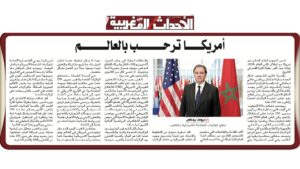
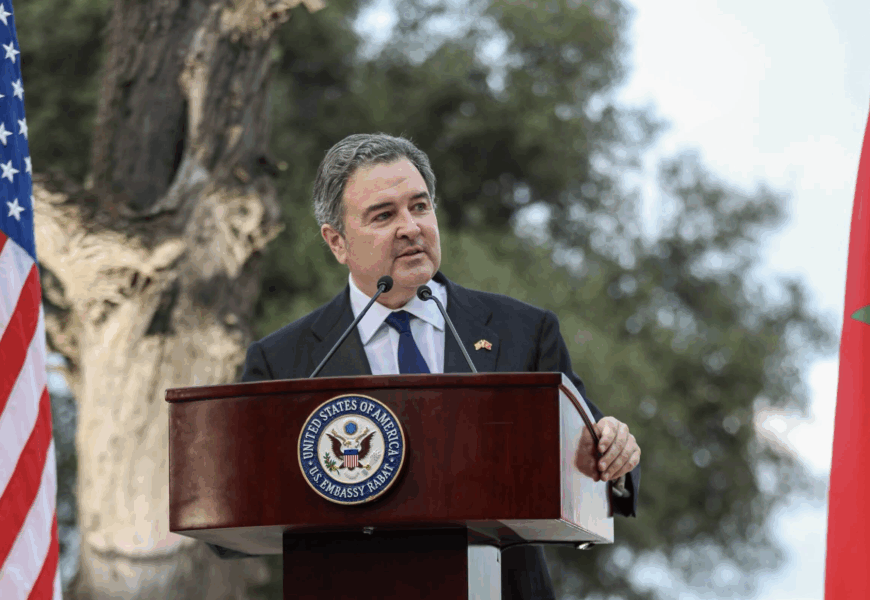
* This contribution by Richard Duke Buchan III, U.S. Ambassador to Morocco, was published as part of the first special dossier on the 2026 FIFA World Cup, produced by our colleagues at Al Ahdath Al Maghribia and released on Friday, July 12, 2026.