

Donald Trump’s visit to Southeast Asia highlights a renewed momentum for regional diplomacy, as cease-fire ceremonies and high-level meetings signal a desire among ASEAN nations to balance power rivalries through dialogue, cooperation, and pragmatic engagement in a shifting global landscape.
By Amy Searight
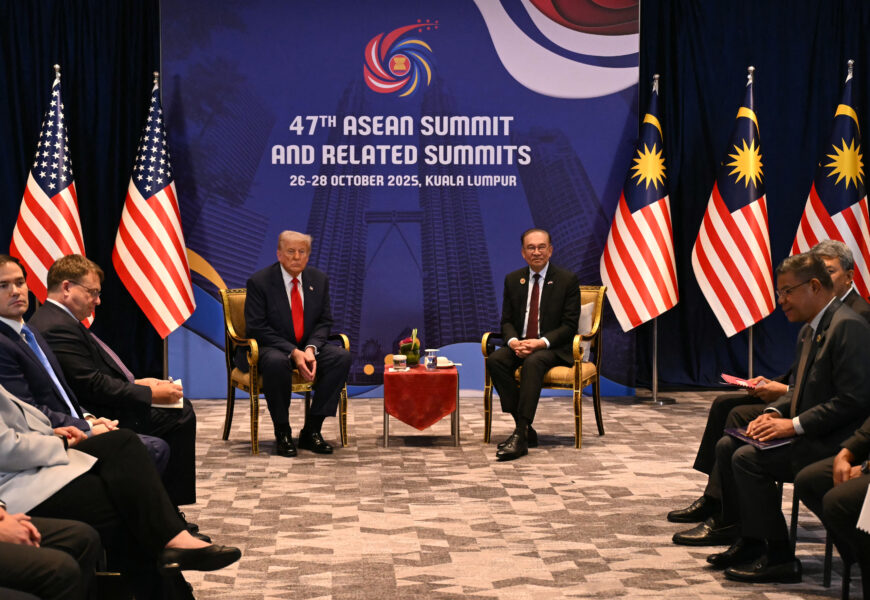
US President Donald Trump kicked off his stretch of Asian summitry on Sunday in Malaysia, where he joined Association of Southeast Asian Nations (ASEAN) leaders for their biannual summit. Trump’s visit drew new global attention on this nearly sixty-year-old institution, but with the summit now complete and the media having moved on, its shortcomings are once again laid bare. ASEAN can make diplomatic progress and put on a good show, but the group’s underlying tensions and often divergent goals remain unresolved.
This week was the second time Trump has participated in the summit, following a visit to the Philippines in 2017 during his first term. In Kuala Lumpur, Trump announced trade deals with Thailand, Cambodia, and Malaysia, but the primary reason he was there was to preside over the main event of the summit—the signing ceremony for a cease-fire agreement between Thailand and Cambodia.
The two countries were engaged in hostilities throughout the summer over a century-old dispute involving a temple and the surrounding area along their shared border. A truce was brokered in late July by Malaysia, following a critical intervention by Trump, who personally called the leaders of both nations and threatened to cut off trade negotiations if they didn’t agree to a cease-fire.